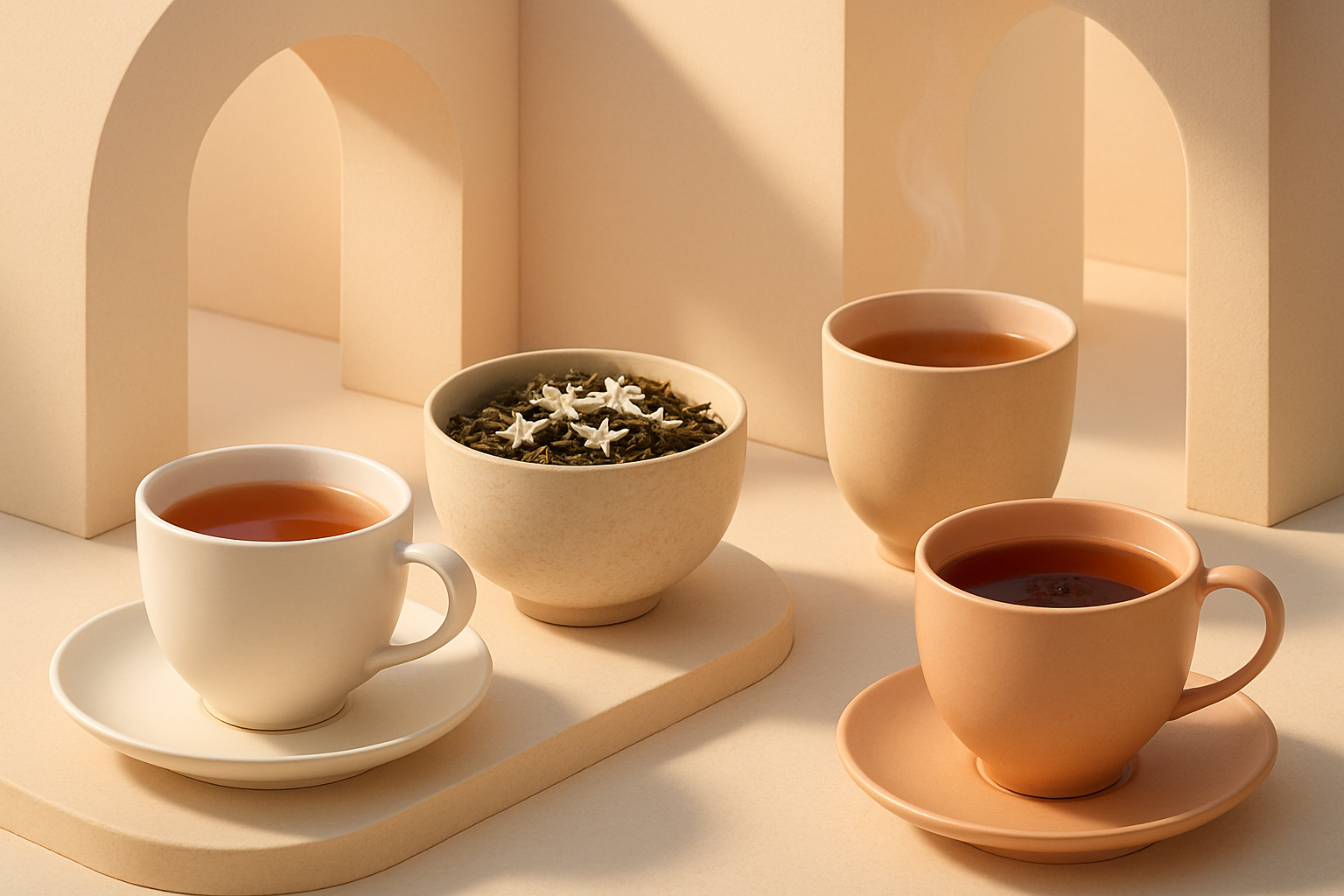



Black Tea vs Green Tea: Two Characters from a Single Leaf
At first glance, black tea and green tea often feel like two different worlds. In discussions around black tea vs green tea, the contrast becomes clear from the very first sip. The color of the infusion, the aroma, and the overall mouthfeel feel distinctly different—one light and refreshing, the other bold and warming. Yet behind these contrasts, both originate from the same source: tea leaves from the Camellia sinensis plant. The characters we recognize today are shaped not by the plant itself, but by how the leaves are processed.
Looking more closely at these differences helps us understand that tea is not only about taste. It is also about process, context, and the moment of consumption. The comparison is not meant to determine which is better, but rather to recognize which character best suits individual preferences.
One Leaf, Different Processes
At the beginning, all tea follows a similar path. Leaves are harvested from the same plant and then undergo a brief withering stage before further processing begins. At this point, a crucial decision is made—whether oxidation is stopped early or allowed to develop fully.
This choice defines the character of the tea in a significant way. From the same raw material, two very different flavor expressions emerge.
The Character of Minimally Oxidized Tea
Tea processed with minimal oxidation aims to preserve the leaf’s natural character. To achieve this, the leaves are heated shortly after harvesting, stopping the enzymatic activity that triggers oxidation.
The result is a brew that tastes lighter and fresher. Aromas tend to be clean and herbal, creating a natural impression that feels close to the fresh leaf itself. This character makes the tea easy to drink and suitable for many occasions, without overwhelming the palate.
From a sensory perspective, the experience is subtle. A light body, gentle bitterness, and a quick, clean finish contribute to a sense of balance and refreshment.
The Character of Fully Oxidized Tea
In contrast, fully oxidized tea allows the leaves to react with oxygen until flavor and aroma compounds develop to their fullest extent. This process deepens the leaf color and builds greater complexity.
The resulting infusion feels fuller and more structured. Aromas lean toward warm notes, often with malty, woody, or lightly caramelized nuances. These characteristics linger longer on the palate, creating a stronger and more pronounced taste experience.
Because of this intensity, fully oxidized tea is often associated with specific moments—such as mornings or afternoons—when a bolder flavor feels more appropriate. It also pairs well with milk, sugar, or other flavor components without losing its core identity.
Matching Flavor to the Moment
When viewed as a whole, these two processing approaches respond to different needs. Lighter tea profiles offer a clean and calming drinking experience that works well at any time of day. Meanwhile, bolder profiles deliver structure and depth, making them ideal for moments when a more substantial taste is desired.
The distinction is not about quality, but about context. Personal taste, consumption habits, and timing all play an important role in shaping the choice.
A Personal Choice
Comparing these two tea characters through the lens of which is better often misses the point. From the same leaf, processing creates a wide spectrum of flavors—ranging from light and refreshing to deep and complex.
In the end, choosing between a subtle or bold character comes down to preference and occasion. Understanding the process behind each style allows us to enjoy tea more thoughtfully, appreciate the diversity created from a single ingredient, and celebrate choices that are deeply personal.
One leaf, two characters, and countless ways to enjoy them.
For teams exploring tea-based formulations, a structured product catalogue can serve as a useful reference point when evaluating extract profiles and application suitability.